
The Limits of Responsibility
Blood ShotV. I. Warshawski struggles to distinguish meaningful help from an impossible obligation to rescue everyone, learning to accept support without abandoning judgment.
increasing Bearing strength in each event
 decreasing
Bearing strength in each eventdecreasingThe Old Obligation
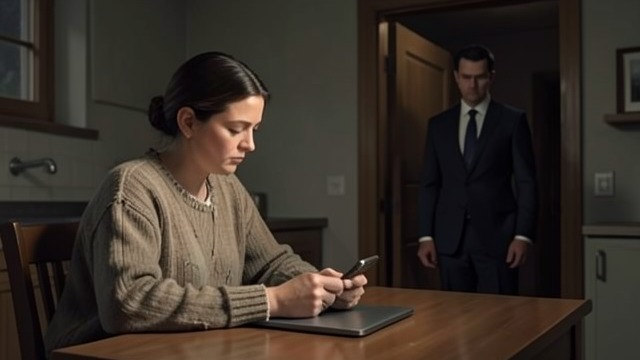
A Familiar Burden
A repeated appeal
V. I. Warshawski accepts Caroline Djiak’s request partly because childhood memories make refusal feel like abandonment.
Personal resentment
She recognizes that she has long resented the caregiving expected of her while still feeling responsible for what happens to Caroline and Louisa Djiak.
The case begins with an unresolved question: whether helping is a choice or a debt she can never finish paying.
A World Beyond Repair

The Scale of Harm
Moral outrage
V. I. Warshawski reacts to the Djiak family’s victim-blaming and wants to undo the suffering Louisa Djiak endured.
Recognition of limits
Lotty Herschel reminds her that no one can heal the whole world and that help works through limited, individual acts.
The advice does not erase anger; it offers a way to act without believing she can control every outcome.
Refusing the Police’s Terms

Help on Her Own Terms
Bobby’s demand
Bobby Mallory urges V. I. Warshawski to share everything she knows, arguing that police are better placed to investigate.
Fear acknowledged
V. I. Warshawski realizes that withholding information is partly a way to avoid admitting how frightened the attack has made her.
She must decide how to accept assistance without pretending that authority alone can solve the case.
Accepting Protection
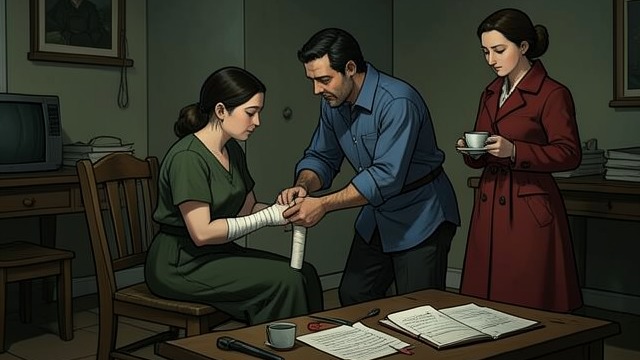
Independence Reconsidered
The cost of solitude
V. I. Warshawski’s injuries and repeated threats make it clear that acting alone can place others in danger as well as herself.
Shared responsibility
She accepts care from Lotty Herschel, Mr. Contreras, and Peppy while continuing to make her own investigative choices.
Independence becomes compatible with dependence when help is offered without taking away her agency.
Work Within Limits

A Partial Resolution
The work is delegated
V. I. Warshawski gives Frederick Manheim the evidence to build the workers’ case rather than carrying every legal burden herself.
Ordinary life resumes
She returns to her investigations and friendships while accepting that questions about Ron Kappelman and the full political network remain unresolved.
The ending values meaningful action without pretending that one person can complete justice alone.
after Caroline Djiak hires V. I. Warshawski
after V. I. Warshawski learns about Louisa Djiak’s abuse
during V. I. Warshawski’s hospital recovery
after the overnight rescue and attack
in the closing weeks of the story
